Sunday, January 25, 2015

Tenacatita Part 1: Work

1/6/15 - 1/7/15

110 NM, 10 hours on motor

JUMBLE departed Yelapa in flat, glassy seas. It was a very tropical scene as Anna and I deflated the dinghy and stuffed it into the cockpit locker. The elation of our little dip in a shady pool above a picturesque waterfall faded fast as the sun blasted us into submission. 2 PM in not the best time to be in full sun in the tropics; steam rose off the jungle. I'd only seen that in movies. It was &%^ing hot!

We motored towards Cabo Corrientes, ready to make a left turn and finally escape the vortex that is Banderas Bay. Lots of cruisers come to Bahía de Banderas and some never leave. The local VHF forecaster, from North Sails I think, had warned of northerlies from the Sea of Cortez and possible rough conditions around Cabo Corrientes. Winds and seas are often amplified off points, so most sailors exercise caution when rounding them. The crew of JUMBLE was feeling rather invincible and eager to see some action, so we hoped for big wind and a fun ride.
Calm Seas Inside the Bay; The Trap is set

I mentioned something a couple posts ago about the arrogance of youth. This was in full effect aboard JUMBLE.

As we approached the cape and were no longer in the lee of Punta Mita, the seas rose to 4'-5', quite small, but more than we'd seen since coming down the coast of Baja. Naturally, we were carrying full sails: 170% jib, full main and mizzen. Once outside the lee of Punta Mita, the wind rose to 15 knots out of the NNW and we were reaching, heading WSW. It felt great, JUMBLE was hauling ass and the wind had a dry, dusty smell, refreshing after that tropical interlude.

Before we could settle into the new conditions, the wind was hitting 20 knots and becoming gusty. JUMBLE is a slow boat, but incredibly forgiving. We've never dipped our leeward toerail and not for lack of trying. I went forward to reef the main and Anna was pulling the working jib out of the hatch. I was amidships, gripping the windward shrouds and staring at the mainsail like an asshole when the boom snapped at the vang and bent upwards about 20 degrees. The main started luffing and I said, "We broke the boom"

Anna shouted forward from the cockpit, "Let's start the motor!"
"What do we need the motor for? We're already doing 6 knots."

We worked to get the mainsail down without breaking anything else. The stainless steel sail track was the only thing holding the boom and all its expensive parts together. It was like a broken arm: floppy, but still attached. Anna luffed the main enough to get it down, still driving off the jib and mizzen. At this point, we were in beam seas and the boom was sliding and skating all over the cabintop and solar panels as short, steep wind waves passed under JUMBLE. After settling into a broad reach, things settled down. We engaged our trusty Sailomat windvane and labored together to remove the mainsail. The sail track was kinked around the breaking point and I had to cut the track with a hacksaw to remove all the slides. We stowed the mainsail on the cabin sole and the detached portion of the boom on the port deck.

At this point, we were happy to be a ketch. Jumble still had two sails left in play. The main boom broke around 1800 and we managed to sort that out and switch to the working jib before nightfall.

The wind rose during the night, maybe point effect or general norther, I don't know. By 0000 we were down to the working jib (no mizzen) and sliding downwind at 6-8 knots. The seas never reached more than 8' (a guess given that it was night), but there were at least 2, possibly three directions. The main train was NW, on the starboard quarter, there was an occasional W swell and, as the evening progressed and the wind came more off the land south of Corrientes, a choppy NE set of wind waves. Even running downwind, JUMBLE's rigging hummed and howled, especially in the gusts. Pretty cool.

This is what happens when we take pictures at night

It was an eventful night, but our boom broke and that was a major bummer. Truth be told, it didn't break because of big wind or seas. What we experienced was a brief period of point effect and a northerly wind blowing down along the coast of Mexico. My guess is that between 2300 and 0100, we had 30 knots, gusting to 35, but no more. The seas were confused and a bit choppy, but we didn't take any water in the cockpit. We came close when a NW and NE wave came together jut a few feet off our stern, but it would have only been a splash, nothing serious.

By the early morning hours, the wind had blown itself out and by 0700 we were motoring and starting on the repairs.

The Boom Stump

The Work Begins


The boom broke because of bad practice. To add insult to injury, we'd discussed the inadequacy of our preventer arrangement back in 2012 on the Baja Ha-Ha. We knew that what we were doing put enormous strain on the boom, in a weak area. A previous owner had either moved or replaced the original vang fitting. I knew this because I'd removed and re-bedded the vang attachment piece shortly after we bought JUMBLE. There were old screw holes filled half-assedly with 4200 or similar. The boom broke cleanly along the forward line of fastener holes, new and old.

Why had we been so foolish? It was easy! And it worked. Our vang protected us from an accidental jibe and it was easy to set up. We were inducing an enormous moment arm on the boom by essentially using the vang as our mainsheet. Stupid, stupid, stupid.

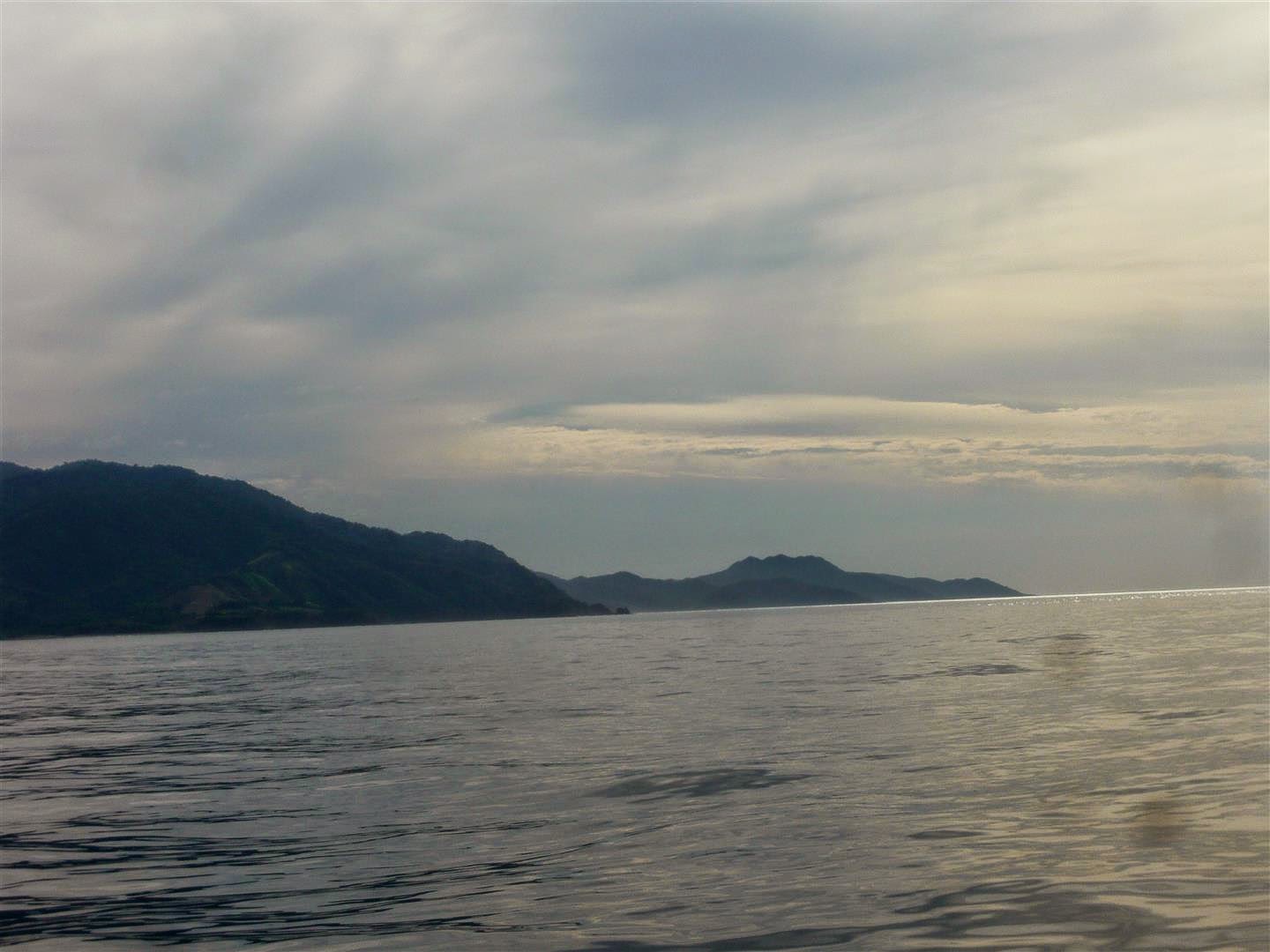
Approach to Tenacatita. Lousy Picture


So, some anonymous guru once said: "cruising is working on your boat in exotic locations". Very true. Luckily, there's at least once idiot aboard JUMBLE who enjoys working on his boat as much as sailing it.

Assessing the Damage: Clean Break


Scarfs Cut and Ready to Laminate

Final Glue up; Second piece took two attempts (days) to get it straight

Patch Sanded and Ready for Glass

Two Wraps of Glass Around Repair

Filler Goop for Sanding/Fairing. Our buddy LUNGTA in the Background

The major work took four days. The last three days were just some rigging and a lousy paint job (that's already failing around the spectra strops). Mosquitoes ate us alive the first couple of nights. We eventually set up some screens over the hatches as it's much too warm here to close them. Silvia from IOLANI was kind enough to give us some DEET. Dengue Fever is no joke and we know at least one cruiser who's had it, so we're being cautious.

Old Boom Arrangement
New Boom. Note the huge lever arm between the clew and vang

With the work completed, we were finally able to have a little fun. More on that to come.


Overnight in Yelapa

1/5/15 - 1/6/15

La Cruz to Yelapa, ~12 NM

Left early afternoon with a nice strong wind on the north side of the bay, 15-20 knots from the NNE. Around the center of the bay, the breeze softened significantly and shifted eventually to the SE and S. During the last hour or so, we mixed motoring and trying to sail in order to make Yelapa before nightfall.

Anna botched the marina exit by getting our windvane's control lines tangled around the electronic autopilot's control bolt, locking the wheel in place. Of course, we didn't realize this until after we were off the dock and reversing away from our slipmate. There had been previous discussions about the stowage of these lines and, suffice to say, it became a very sore subject during that incident.

We avoided any contact with other boats or the dock, but the autopilot was damaged in the struggle and spilled its 21 ball bearings into the cockpit. We quickly covered the cockpit drains with tape, so we didn't lose any. Meanwhile, Anna took us over to the fuel dock and took care of our first real diesel fill since San Diego. At this point, we weren't on speaking terms, and I threw myself into fixing the autopilot and damaged wooden steering box (the control bolt split the wood in the chaos).

Steering Situation, Post-Repair
Only Permanent Damage: We'll fair and paint mañana

It took about three hours to get everything back together. The slight rolling of a quartering sea wasn't helpful, but with a lot of masking tape and swearing, I managed to get all the bearings placed in their plastic retainers (there are three with seven bearings each on the SPX5) and the wheel assembly snapped back together. Before we got to Yelapa, we'd taken the wheel off (Anna was able to steer just holding the shaft) and reassembled the vane's drum, autopilot and glued/screwed a backing block for the steering box. We needed to clean the interior of the pilot anyway. Combined with a thorough greasing of the worm drive and cleaning of hard growth between the rudder and keel in Punta Mita, JUMBLE's steering is now smooth as ever.

Luckily, I had done this same job once before for Sean and Steve on TABLETALK, back in San Diego. That job took significantly more time and in a stable, shop environment. This incident illustrates how useful it is to be intimate with all of your boat's equipment. Knowing how many bearings you have to collect from your cockpit grate and storage boxes and how everything fits together without the manual or a diagram is a blessing. I'm not suggesting that cruisers disassemble their equipment just to put it back together, but if something breaks and you fix it yourself, you gain familiarity with the how it all goes together and the next failure isn't nearly as onerous. If we'd had to buy a new wheel/motor assembly, it would have set us back many hundreds of dollars and weeks worth of cruising time. There are no West Marines in Mexico and boating gear, except for fishing gear, has been very hard to come by. We haven't tried importing parts, but from what I'm told, it's a major pain and charges are high.

Enough technobabble!

Yelapa was a relaxing time, we picked up some moorings, for a steep $200 pesos each. Yelapa is a very marginal anchorage, open to the prevailing NW wind. Otherwise, I'm sure it would be crawling with sailors. The bay is very steep and deep in the center. There is a narrow shelf, very close to the beach, where you can anchor in 50 feet or so. There's another area off the town where it's 80' less than 100 yards off the shore. We sounded one area less than 30'. It was marginal: close to some rocks and a fixed concrete pier used for offloading pangas. In any case, all the decent anchoring areas were filled with moorings, apparently in an attempt to coax nervous cruisers to the area, much like Catalina Island back home. Dammit.

I'm whining again.

The night was a little rolly, not much worse than La Cruz. JUMBLE and TUMBLEWEED circled around their moorings until a good land-breeze filled in for the first half of the evening. Anna made some great personal pizzas. Dough from scratch, of course. The next morning, Wes and I got partially soaked landing our dinghy on the steep, gravely beach. Anna, with the backpack, jumped off the bow unscathed. We paddled in, rather than risk the outboard on such a short trip. The few folks hanging out on the beach at 10 am had some entertainment.

Beach Bar

River Behind the Bar

We landed at the far end of this beach

We all were eager to get moving by afternoon, so we agreed on a short hike to the smaller waterfall north of the village. A much grander waterfall is further inland along the river, a few miles inland. Our route took us through town, then past plenty of souvenir stalls on the route to the waterfall. It was pleasant and, I hate myself for using this word, quirky. Aside from a couple fellas on the beach peddling pictures with large iguanas and marijuana, there wasn't much tourist hassling.


We arrived at the little waterfall after a languid stroll. 30-40 minutes? Pretty cool, especially for us desert dwellers. I think the last waterfall we saw was along the Columbia River 5 or 6 years ago. Sadly, we weren't the first or only ones there. Wes had the right idea and asked one of the locals in attendance how to get to the pool atop the falls and we struck out into the jungle. Predator, with our beloved governator, was filmed nearby and the larger waterfall to the west was apparently featured in the movie. Real adventurous stuff, ya know.

After a couple false starts, we found the trail, by following the town's haphazard HDPE water supply pipes. Whole bundles, tied to trees and strung over canyons, led us further up towards the pool.


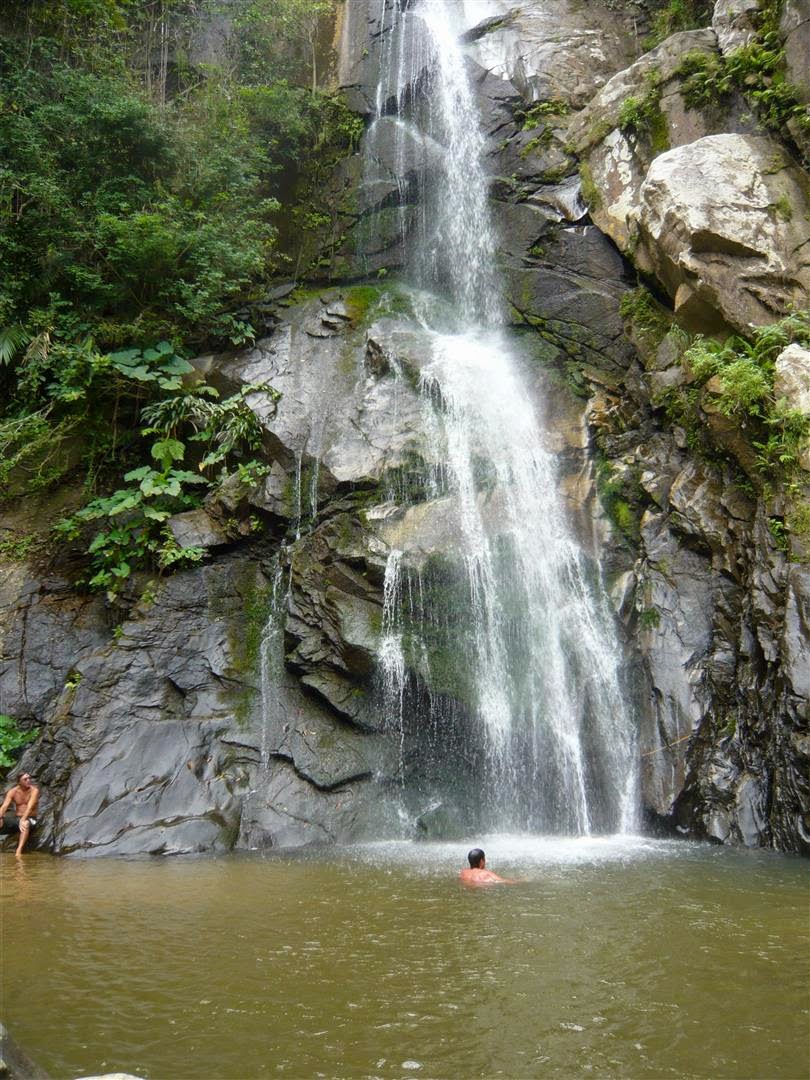
Our favorite shot of the trip

After a short, not too strenuous hike (in flip flops, of course), we reached a sweet, natural infinity pool atop the falls and enjoyed our first swim in fresh water. The bottom was 4-5' deep, deeper upstream, clean sand and very little muck or slime. Neat-o.

Looking back down

The yellow thing is one of many plastic water pipes that supply the town


On the way back, some locals had opened up the beach berm to drain the river and we waded knee to thigh deep in some fast water. Pretty fun actually. A small dog jumped in a got washed out into the bay, but he just swam back in, completely undisturbed. The gravel beach was perfect for grinding all the dogshit out of the siping in our sandals. Dogshit was a major hazard in the Banderas Bay region. Lots of dogs and, at least in La Cruz, a fair amount of fleas. We managed our beach launch with no casualties.

With a somewhat sketchy forecast of Northers from the Sea of Cortez, we headed for Cabo Corrientes in flat calm as Wes sailed for Punta Mita for some surf. The crew of JUMBLE had no conception of the rugged, troubled seas that lay ahead :)

Tune in next time for chilling tales of high adventure and anxiety aboard our intrepid little vessel!

Wes slips his mooring. Adios amigo

Catching Up: Adventures in Banderas Bay Area

12/7/14 - 1/5/15

Due to our dentistry agenda, JUMBLE didn't leave La Cruz until January 5th. We entertained ourselves with boat projects and a few short trips. We made a few friends and acquaintances, enough to get completely smashed on New Year's Eve (a JUMBLE tradition 5 years running).

To keep ourselves busy, we did a few projects, cleaning and re-organization. We picked up an old charge controller and two 50 W panels for $500 Pesos at a swap meet. The seller's claim was 50 W, but based on size I'm guessing they're 40 W, whatever.

To install them, we fabricated some teak clamps (the factory made ones were unavailable, of course), so that the aft panels can be rotated to vertical and out of the way when sailing. So far, it's worked out well and we can run our tiny and well-insulated fridge with no problems and still have enough power for several hours of laptop use. As we've moved south of La Cruz, it's been much sunnier and some days we run things just to bleed off power, which is a problem only if we're running the engine.

Stern Panels

Adjustable Clamps

Cabin Panels, Often Shaded while Sailing :(

Otherwise, cup holders, latches and other miscellany, nothing too exciting.

Jumble took a trip out to Punta Mita and Las Marietas. Marietas were a mostly a disappointment. The visibility was the best we've had diving in Mexico, maybe 30' and the scenery was pretty good with lots of reef fishes along the rocks and some larger fish in 70' over sand and rock. What ruined the trip was the charter boats and day trippers. We arrived as early as possible to beat the rush and anchored outside four mooring cans. We later learned that everyone is entitled to the cans on a first come first serve basis. Anchoring is no longer permitted. Our "Updated 2014!" guide did not reflect this.

Marietas West Approach
The Anchorage

Pangas (open, outboard boats, usually 15' - 25') constantly sped through the anchorage and dive area. They were either rushing to a mooring can to 'reserve' it for one of their large (80'-ish) catamarans, delivering kayaks and stand-up paddle boards, or taking tourists on a speedy tour of the shoreline. The turnover rate was unbelievable. We spent the better half of the day at Marietas West and the big cats averaged about two hours at the anchorage. Just enough time for a few folks to get out and paddle around. A surprising number of tourists just hung out on the boats. I'm not sure what the big attraction was.

First of the Charter Boat Herd

Snorkeling and skin diving was pretty sketchy in these conditions. The panga drivers seemed very accustomed to driving around with people in the water and some of them were careful. However, there was a strong correlation between the age of the operator and the speed of his boat. A few of the panga drivers were high school age and these were the guys to look out for. I'm not sure if it's a macho thing or just the arrogance of youth, but trying to make eye contact with these guys was an exercise in frustration. On the other hand, the older operators would look around, make eye contact and at least give you a thumbs up.

We lucked out with our anchor, it took me forever to locate it (my breath-holds are lousy) at around 50' in a small patch of sand about 40' square. There was solid rock all around. The rocks weren't pinnacle, anchor-snagging things, but still, it might have been a problem. A couple times, on my way to the surface, boats were passing over and I really had to look out. Anna was spotting, but after two sorta close calls (one with a big catamaran), I was over it and we got out of the water.

Sadly, the batteries on our Go-Pro camera were dead. The Marietas were the only photo-worthy dive we've had. We need to engineer a strap and handle to hold the camera in one hand as the head strap is useless for diving: it flies off on your way down and interferes with your mask.

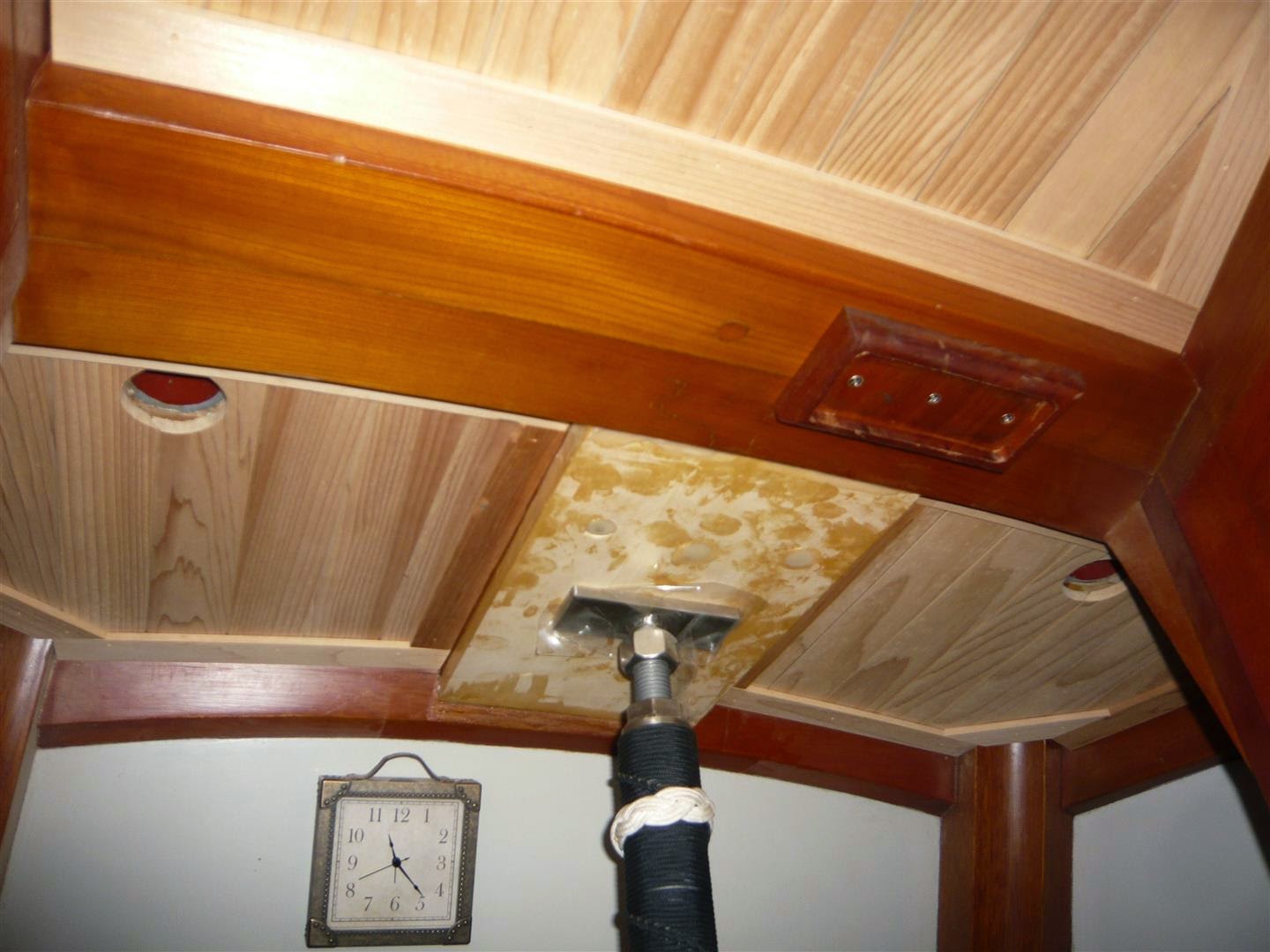
Before departing, we spent three nights in the Marina La Cruz provisioning and taking care of a project that has stressed us since we purchased JUMBLE. Reader's Digest version: JUMBLE has a deck-stepped mainmast supported by spruce beams which are oddly placed. There has been a hairline crack in one beam since purchase and it hasn't gotten bigger, but it's concerning. The bigger issue is that the mast step isn't centered on the beams and a wimpy spruce plate supports the forward portion of the mast and joins it to the front on the cabin. This plate has bowed heavily over the years. This gives the mast excessive pre-bend and that limits our tuning of the lower shrouds to trying to minimize this.

I did a half-assed late-night project in San Diego when we had the masts down, gluing in purple-heart pieces under this plate. They separated due to a poor bond on the way down Baja. We had an adjustable compression post made way back in 2010 when we bought JUMBLE, but I was too chickenshit to put it where it needed to be because of interference with vee-berth access and cabinets. Now that JUMBLE is a real cruising boat, priorities are different than when living aboard and structure won out over comfort. This position is perfect as it's centered under the mast and sits atop a fiberglass floor beam that's blocked down to the ballast cavity. This was a sweet little project, and everything held tight once I re-tuned the rig. One less thing to worry about.

Gluing in second plate. Mostly to level contact surface
Quick and Dirty Paint Job
Final Product

We finally left La Cruz on the 5th with Wes, on the ketch TUMBLEWEED, headed for Yelapa, a village on the south side of Banderas Bay. Yelapa is only 10 miles away, but feels like another time and place. Lots of pictures and more blabbering to come.

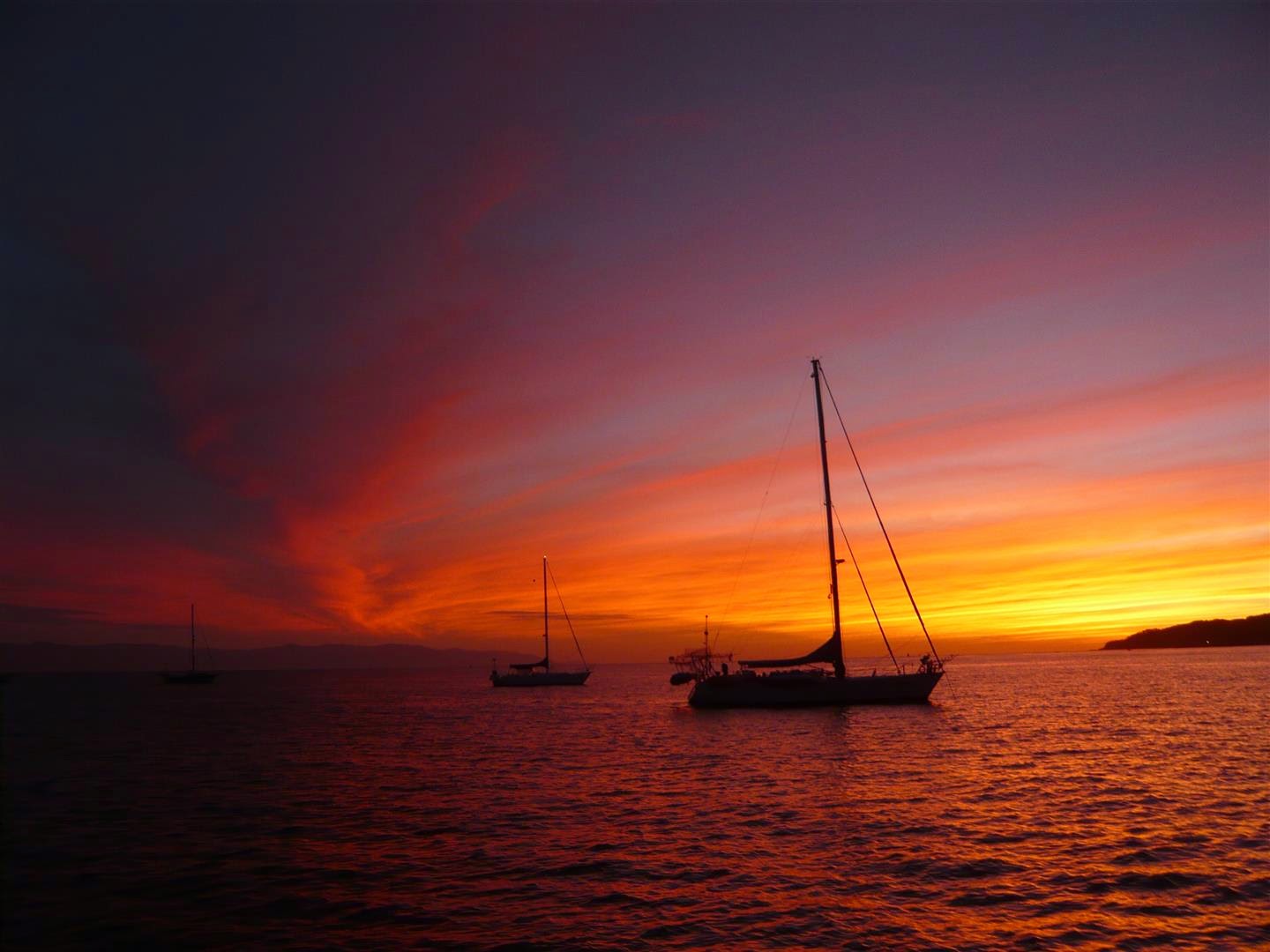
Last evening in La Cruz Anchorage
Sunrise